
How to Train a German Shepherd: Complete Training Guide
Everything you need to know about training, caring for, and raising a well-behaved German Shepherd.
Looking for the best German Shepherd training tips? This complete guide covers everything you need to know about training German Shepherd puppies, including obedience training, socialization, house training, and behavior management. Whether you're a first-time German Shepherd owner or experienced with the breed, you'll find proven training methods that work.
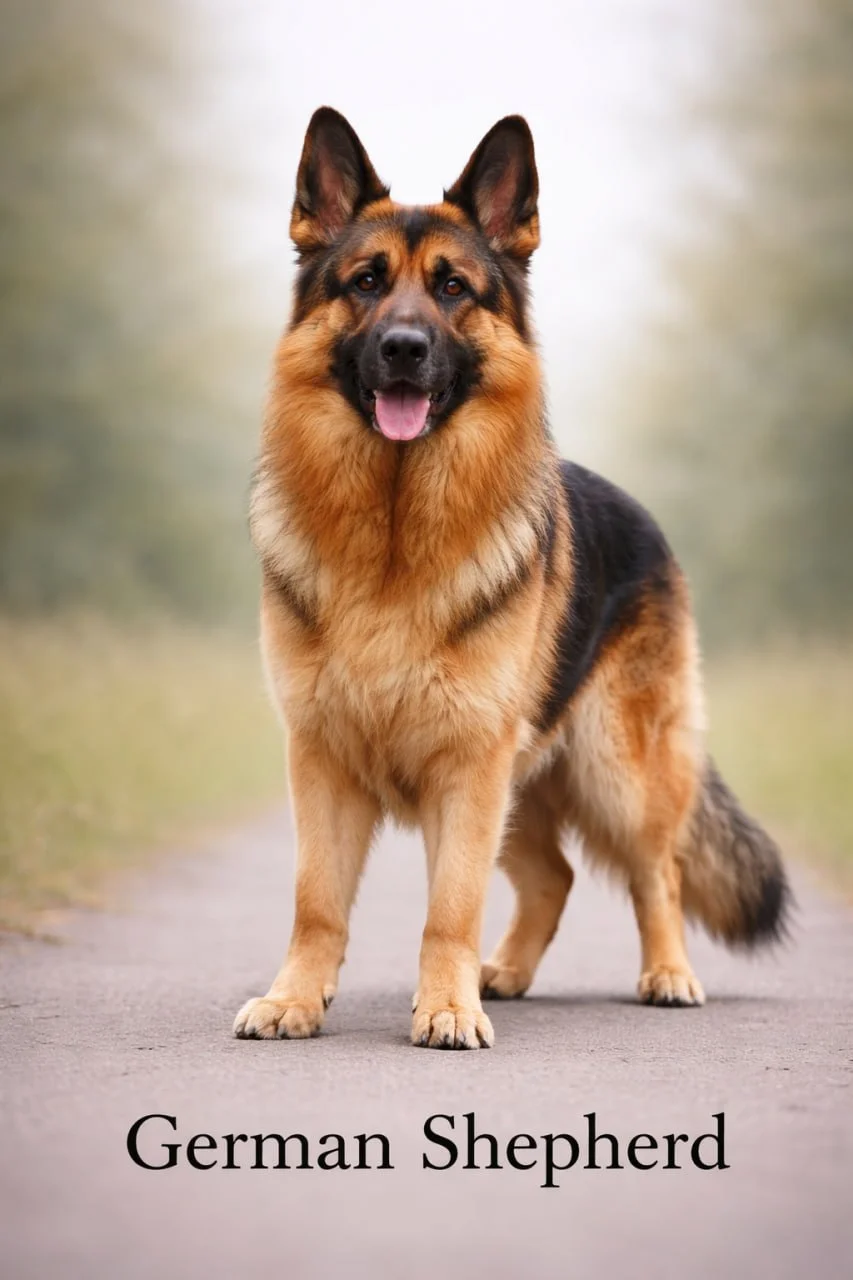
About German Shepherd Training & Temperament
The German Shepherd is a large breed known for being confident, courageous, smart. Originally from Germany, this breed has become popular worldwide for its distinctive personality and characteristics.
Essential German Shepherd Training Tips & Techniques
Best Training Approach for German Shepherds
When training a German Shepherd, it's important to understand their unique temperament. This breed responds best to:
- Positive reinforcement - Reward-based methods work exceptionally well
- Consistency - Establish clear rules and stick to them
- Early socialization - Start exposing your puppy to different people, places, and experiences early
- Short training sessions - Keep sessions engaging and fun (5-10 minutes for puppies)
Key Commands to Teach First
- Name recognition - Foundation for all training
- Sit - Basic control command
- Come - Critical for safety
- Down - Builds impulse control
- Stay - Essential for safety and manners
Common German Shepherd Puppy Training Challenges & Solutions
Every breed has unique challenges. For the German Shepherd, common training issues include:
- Understanding breed tendencies - Work with your German Shepherd's natural instincts, not against them
- Energy management - Ensure adequate exercise before training sessions
- Socialization needs - Proper exposure during the critical 3-14 week window
- Consistency across family - All household members must follow the same rules
💡 Pro Tip: The German Shepherd's confident, courageous, smart nature means they benefit from training methods that work with their personality rather than against it.
German Shepherd Care & Training Requirements
Exercise Requirements
The German Shepherd needs appropriate exercise to stay healthy and well-behaved:
- Daily walks appropriate for size and energy level
- Mental stimulation through training and puzzle toys
- Age-appropriate play sessions
- Structured activities that channel natural instincts
Grooming Needs
Regular grooming keeps your German Shepherd healthy and comfortable:
- Brush coat regularly (frequency depends on coat type)
- Check ears weekly for debris or infection
- Trim nails every 2-4 weeks
- Brush teeth several times per week
- Bathe as needed (typically monthly or when dirty)
Health Considerations
Like all breeds, the German Shepherd has specific health considerations to be aware of:
- Regular veterinary check-ups (especially during first year)
- Stay up to date on vaccinations
- Maintain healthy weight through proper diet and exercise
- Monitor for breed-specific health issues
- Provide preventive care (heartworm, flea/tick prevention)
Tip: Discuss breed-specific health concerns with your veterinarian during your first puppy visit.
How to House Train Your German Shepherd Puppy
House training success requires consistency and patience:
- Establish a schedule - Take puppy out every 1-2 hours initially
- Use a designated potty area - Same spot helps puppy understand
- Reward immediately - Praise and treat the instant puppy goes outside
- Supervise closely indoors - Watch for sniffing, circling, whining
- Never punish accidents - This damages trust and delays training
See our complete house training guide for detailed instructions.
Puppy Socialization: Training German Shepherds to Be Well-Behaved
The critical socialization window is 3-14 weeks old. During this time, expose your German Shepherd puppy to:
- Different people - Various ages, appearances, behaviors
- Other dogs - Friendly, vaccinated dogs of different sizes
- Environments - Parks, streets, indoor spaces, different surfaces
- Sounds - Household noises, traffic, sirens, thunder recordings
- Handling - Touching paws, ears, mouth for grooming and vet visits
Check out our complete socialization checklist for more details.
Professional Training Resources
While these tips provide a solid foundation, professional training can accelerate your German Shepherd's progress and address specific behavioral issues.
Professional Dog Training Program
Get expert video guidance for all common behavior issues, obedience training, and breed-specific strategies.
📚 EXPLORE TRAINING PROGRAM →Key Takeaways: German Shepherd Training
- ✅ Start training and socialization early (8 weeks old)
- ✅ Use positive reinforcement methods consistently
- ✅ Understand and work with the German Shepherd's natural temperament
- ✅ Provide adequate exercise and mental stimulation
- ✅ Keep training sessions short, fun, and rewarding
- ✅ Be patient - every dog learns at their own pace
- ✅ Socialize during the critical 3-14 week window
- ✅ Establish house training routine immediately
Related Training Guides
German Shepherd Training Timeline: 8 Weeks to 6 Months
Weeks 8-12: Foundation Phase
During the crucial first month of German Shepherd puppy training, focus on building trust and establishing basic routines. Your German Shepherd puppy is in a critical learning period where positive experiences shape their entire life. Start with:
- Socialization: Introduce your German Shepherd to new people, dogs, sounds, and environments daily. This breed-specific socialization window closes around 16 weeks, so maximize every opportunity.
- House training: Take your German Shepherd out every 1-2 hours. Reward immediately when they eliminate outside. Consistency is key - German Shepherds thrive on predictable schedules.
- Name recognition: Use their name positively 20-30 times daily. This builds the foundation for all future training commands.
- Crate training: Make the crate a positive space with treats and toys. German Shepherds can learn to love their crate, providing them a safe den.
Weeks 12-16: Basic Commands
Now that your German Shepherd puppy understands basic obedience training commands and basic routines, introduce essential commands. Keep training sessions short (5-10 minutes) but frequent (3-4 times daily). German Shepherds respond best to:
- Sit: The gateway command. Use it before meals, walks, and play. Most German Shepherds master this in 3-7 days with consistent practice.
- Come: Practice recall training in a secure area with high-value dog training treats. This is a safety-critical command for German Shepherds who may have strong prey drive or independence.
- Down: Teaches impulse control. Start from sit position and lure with treats. German Shepherds may resist at first - be patient and positive.
- Stay: Begin with 5-second stays and gradually increase. This challenges your German Shepherd's natural energy and curiosity.
Months 4-6: Advanced Skills & Problem-Solving
Your German Shepherd is now ready for more complex training. Address breed-specific challenges and refine obedience:
- Leash manners: German Shepherds can be strong pullers. Practice loose-leash walking daily with directional changes and reward-based methods.
- Impulse control: Teaching "leave it" and "wait" prevents common German Shepherd behavioral issues like counter-surfing or door-dashing.
- Recall reliability: Practice emergency recalls with jackpot rewards. A reliable recall can save your German Shepherd's life.
- Distraction training: Gradually increase environmental challenges. German Shepherds need to respond to commands even with distractions present.
Common German Shepherd Puppy Training Mistakes to Avoid
Mistake #1: Inconsistent Dog Training Rules
Different family members using different commands or allowing different behaviors confuses German Shepherds. If jumping is sometimes okay and sometimes not, your German Shepherd can't learn the rule. Solution: Hold a family meeting and agree on consistent commands, rules, and consequences. Write them down and post them where everyone can see.
Mistake #2: Puppy Training Sessions Too Long
German Shepherds have limited attention spans, especially as puppies. Sessions longer than 10-15 minutes lead to frustration and slower learning. Solution: Multiple short sessions (5-7 minutes) throughout the day are far more effective than one long session. End on a positive note while your German Shepherd still wants more.
Mistake #3: Using Outdated Dog Training Methods
Yelling, physical corrections, or "alpha rolls" damage your German Shepherd's trust and can create fear or aggression. These outdated methods work against the breed's natural temperament. Solution: Use positive reinforcement exclusively. German Shepherds are eager to please and respond brilliantly to reward-based training.
Mistake #4: Skipping Puppy Socialization Training
The 8-16 week socialization window is critical. German Shepherds who miss this period often develop fear or reactivity issues that are harder to fix later. Solution: Safely expose your German Shepherd puppy to 100+ new experiences before 16 weeks. Carry them to places they can't walk yet (before full vaccination).
Mistake #5: Expecting Too Much Too Soon
German Shepherds are intelligent but they're still puppies. Expecting perfect obedience at 12 weeks sets everyone up for frustration. Solution: Celebrate small victories. If your German Shepherd sits 7 out of 10 times, that's progress! Consistency over weeks and months brings mastery.
Advanced German Shepherd Obedience Training Techniques
Clicker Training Methods for German Shepherd Puppies
Clicker training creates precise communication with your German Shepherd. The click marks the exact moment of desired behavior, making learning faster. Start by charging the clicker: click + treat 20 times until your German Shepherd looks excited at the click sound. Then use it to shape new behaviors with perfect timing.
Capturing Natural Behaviors
Watch your German Shepherd throughout the day and click + treat natural behaviors you want more of. Does your German Shepherd naturally settle calmly? Click and reward. This builds desirable habits faster than trying to force behaviors that don't come naturally to the breed.
Distance, Duration, and Distraction (The 3 Ds)
Once your German Shepherd knows a command, systematically increase challenge:
- Distance: Ask for commands from progressively farther away
- Duration: Gradually extend how long they hold positions
- Distraction: Practice in increasingly stimulating environments
Only increase ONE of the 3 Ds at a time. If you ask for a long sit (duration) from far away (distance) with dogs nearby (distraction), you're setting your German Shepherd up to fail.
Proofing Commands in Different Contexts
German Shepherds don't automatically generalize. Just because they sit in your kitchen doesn't mean they understand "sit" at the park. Practice every command in 10+ different locations: backyard, front yard, sidewalk, park, friend's house, pet store. This builds true reliability.
German Shepherd Puppy Behavior Problems & Training Solutions
Excessive Barking - Dog Training Solutions
Why German Shepherds bark: Alert barking, boredom, attention-seeking, or anxiety. Identify the trigger first.
Solution: Teach "quiet" command by rewarding silence. Address underlying causes - ensure adequate exercise, mental stimulation, and don't inadvertently reward barking with attention. German Shepherds who are properly exercised through daily training and mentally stimulated bark significantly less. This is a key principle in effective German Shepherd training programs.
Jumping on People - Obedience Training Fix
Why German Shepherds jump: Excitement and greeting behavior. It worked as a puppy to get attention, so they continue.
Solution: Ignore jumping completely - turn away, cross arms, no eye contact. The instant all four paws are on the ground, give attention and treats. Consistency from ALL humans is critical. Practice greetings 5-10 times daily until your German Shepherd defaults to sitting for attention.
Destructive Chewing - Puppy Training Solutions
Why German Shepherds chew: Teething (up to 6 months), boredom, anxiety, or natural exploratory behavior.
Solution: Provide appropriate chew items (bully sticks, Kongs, nylabones). Manage environment - remove temptations. Redirect to appropriate chews and heavily reward. Increase exercise - a tired German Shepherd is a good German Shepherd. Mental enrichment (puzzle toys, training sessions) helps too.
Separation Anxiety
Signs in German Shepherds: Destructive behavior only when alone, excessive barking/howling, house soiling, escape attempts.
Solution: Gradual desensitization. Start with 30-second absences and slowly build up. Don't make departures/arrivals dramatic. Provide puzzle toys filled with treats. Consider crate training if not already done. Severe cases need professional help - separation anxiety rarely resolves without intervention.
Best Dog Training Equipment & Tools for German Shepherd Puppies
Essential Training Tools
- Flat collar or harness: For German Shepherds, a well-fitted harness prevents pulling-related trachea damage. Look for front-clip harnesses to discourage pulling.
- 6-foot leash: Standard training leash. Avoid retractable leashes during training - they teach pulling.
- Long line (15-30 feet): For recall training in open areas while maintaining safety for your German Shepherd.
- Treat pouch: Convenient access to rewards during training walks with your German Shepherd.
- High-value treats: Small, soft treats your German Shepherd loves. Variety prevents boredom.
- Clicker: Optional but highly effective for precise communication with German Shepherds.
- Crate: Sized for adult German Shepherd - they should stand, turn around, and lie down comfortably.
Training Treat Selection for German Shepherds
Choose treats based on training context:
- Easy tasks: Regular kibble works for German Shepherds during basic practice
- New skills: Soft, smelly treats (cheese, hot dogs, freeze-dried liver)
- Distracting environments: "Jackpot" treats your German Shepherd rarely gets (chicken, steak)
Keep treats pea-sized - it's the frequency, not the size, that matters to German Shepherds. Large treats slow down training and add unnecessary calories.
Frequently Asked Questions About German Shepherds
Are German Shepherds easy to train?
German Shepherds respond well to positive reinforcement training when started early. Their temperament and intelligence level affect training ease, but consistency and patience lead to success with any breed.
What age should I start training my German Shepherd puppy?
Start training your German Shepherd puppy as early as 8 weeks old. Focus on socialization, basic commands (sit, stay, come), and house training during the critical 8-16 week period.
How much exercise does a German Shepherd need?
Exercise needs vary by age and individual energy level. Most German Shepherds benefit from daily walks, play sessions, and mental stimulation through training games.
Are German Shepherds good with children?
With proper socialization and training, German Shepherds can be excellent family companions. Always supervise interactions between dogs and young children, and teach both proper behavior.